Apartment owners and tenants have to pay maintenance fee for the amenities and service enjoyed by them in their apartment. Expense incurred for the maintenance of common area is shared among residents of apartment and income is distributed among apartment owners. Apartment owners form an association for collecting the maintenance fee and association works for the welfare of owners and residents of apartment.
![]() |
![]() |
Popular procedures for calculating maintenance fee
There are different procedures or methods adopted by association or society for collecting monthly maintenance fee. Some of the important practices that are prevalent are following.
- Flat Monthly Fee:
Under flat monthly fee, apartment owners association or society calculates sum or total maintenance charge and divides equally among all flat owners. In an apartment, there maybe flats with different sizes. Under this system irrespective of size of the flat, all flat owners will be paying equal maintenance fee. This system is generally followed where apartments are of the same size (Sq. ft). - Per Square feet rate:
Variable rate would be depending on square feet of each apartment or flat. Under this method, rate or fee varies depending on square feet owned by apartment owners. Larger the square feet owned, higher will be monthly maintenance fee. This is widely practiced in Apartment societies with different sizes of apartments. The general logic behind being that since you have bought the flat on based of sq ft., you must pay the maintenance on the same. - Partial flat rate:
Under this method, association or society charges flat rate for a limit square feet and each additional unit will be charged extra. For e.g.: Flat owners who owns up to 1000 sqft will be charged fixed rate and for addition of 100 sqft will charged extra 2 per cent. In this case, all flat owners with 1000 sqft pay equal amount but flat owners of 1100sqft, 1200 sqft and 1500 sqft pay different amount towards monthly maintenance fee. - Mixed approach:
It’s a central approach to maintenance charging. Generally followed in apartment societies with variable sized apartments. Here there is a per square feet charge, which is generally low plus total expenses divided equally among the flats.
The common expenses will include the amounts determined to be payable as such by the Society or Association. It includes expenses such as expense of administration, maintenance, repair or replacement of common areas and facilities. So long as there is no dispute, any system acceptable to all the apartment owners can be implemented on the basis of agreement or consensus.
Method of calculating maintenance fee varies depending on the agreement or byelaw of association.
How is your maintenance fee calculated? Is your association calculates monthly fee in similar way and if in different way, how?
Did you like this Article? Share it with others!Tags: Apartment Maintenance, Maintenance Fee Amount, Methods to calculate maintenance charges in apartment societies, Society Maintenance Charges


I feel that irrespective of the size of the apartment, the Maintenance charges should be the same for every Apartment since this bring about an equality of feeling amongst the owners.
Otherwise, those who are required to paylarger fee owing to their owning larger apartment, maydevelop an ego and they may feel they are superio to others and may also dictate terms to the Association.
‘Ego’ or ‘To avoid superiority complex’ is not a justifiable reason to charge a flat fee to all residents… If you have purchased something expensive, you should also be prepared to spend to maintain it and vice versa.
No association should cater to only one sect of people in the complex (be it small/big unit owners). Agreeing on rules upfront and self discipline is the key to successful societies (apartment complexes).
In my view, maintenance amounts should have two components - major component should be proportional to sqft rate and the smaller part should account for some fixed costs like salaries of managers and support personnel, etc.
The apartments work on a concept called Fractional Ownership. Every individual owns the apartment in the proportion that he/she has paid for. Consequently, each individual will also share common areas, profits, expenses, voting power in the same proportion.
This necessarily implies that Sq. ft. basis is at work. As this is the only way this concept can work. People who are advocating common charges (irrespective of the size) should remember that if they own X% of property, they must also pay the same X% of the maintenance, as this is what it takes to maintain it. Trying to divide the expenses based on security, lift etc. is frivolous.
Maintenance should ideally be charged based on size as well as consumption. Size is also proportional to number of residents, but often this rule does not hold, hence some fixed costs which are related to the maintenance of the property should be related to the size (expenses such as security services, housekeeping services, AMCs of equipment, building insurance), while other running costs such as staff salaries, garden maintenance, common electricity, water, diesel, ongoing repairs and consumables are charged based on some other formula related - say - to the actual number of occupants in a unit. Capital costs should not be mixed up with maintenance, but should be met from a separate fund; again here the contribution would be based on size of dwelliing.
Obvously the number of persons in a unit would not be fixed, and hence calculating the contribution becomes a difficult proposition, which is why most societies just collect based on size, or just a fixed amount per dwelling (I have come across both)
It is grossly incorrect to distribute the income to the owners. The correct method is to credit it to a fund - either a sinking fund or any other savings fund of the society, and then adjust the maintenance collected accordingly. If the income is distributed, the society becomes a partnership and is liable to pay taxes, whereas otherwise it is a not-for-profit association for a specific purpose.
“Mixed approach” in the article would be the best. Becuase ideally it is charged per sqft some amount and the common things ( Which are common in apartments irrespective of size of flat) divided on equal basis.
I support the view that the maintenance charges must be based on the size of the flat (per sq.ft. formula) for three reasons:
· In general, the larger flats have more occupants. Hence, more people benefit from the common facilities, be it the club usage, a stroll in the campus, or the amount of garbage disposed.
· A larger proportion of the common facilities like the roads and the horticulture growth is associated with larger flats due to the larger area occupied by these flats.
· A larger flat with more occupants is likely to place more demands on maintenance services like plumbing and electrical than smaller flats with, say, only a couple staying.
I do not subscribe to the view that the maintenance charges must be related to the number of people staying in a flat. In occupancy, there will obviously be exceptions to general rules, like a couple staying in a larger flat. In such cases, it is the personal choice of the individuals for whatever reason, and that should not be the guiding factor for community decisions.
I also would like to make a distinction between maintenance charges and consumption charges like electricity, water and DG set power. While the maintenance charges should be to the account of owners, consumption charges should be to the account of residents based on the actual consumption. Maintenance charges should not be borne by the tenants because the rental value is already loaded taking into account the common facilities and services. Further, the maintenance charges go to maintain permanent structures like the club, swimming pool, common area electrification, garden, building insurance, campus security etc. The proper maintenance of these items is in the long-term interest of the owners. It is true that the residents enjoy these facilities much as they enjoy living in the flats and the comparatively higher rent covers the flat accommodation as well as the common facilities.
I entirely agree with the views of Mr. Chellppa that it is grossly incorrect to distribute the income, if any, amongst the owners. The income must be used to improve the amenities or to decrease the maintenance costs in subsequent years. Otherwise, the RWAs that are usually registered as non-profit or not-for-profit associations would be liable for legal action and tax burdens.
I am completely NOT in agreement with Viswanathan. I am staying is an apartment which has 2100sqft, 80 apartments in tower with 20 storey. Most of the family in my building are single family with 2 kids and retired people. Bigger appartment does not mean you have more people staying - it is not a dormatory…please. I feel pity on such narrow thinking.
Instead the wear and tear of this building is much less than apartment tower with more number (160) but smaller flats (900Sqft, 1200sqft). I have seen painting/lift/power (3 litfs instead of 2 etc etc), lights require more maintenence and cost.
Instead the model our builder was following few years back was the larger apartment paid less ~0.6/sqlft (for 2100sqft = Rs1260) and smaller apartment paid more ~0.8/sqft (for 900 sqft = Rs720). Even then you see the rate paid by bigger aprtment was twice, but still there is nothing extra they get.
Why should a apartment owner with big bigger apartment get penalized with double maintainance cost for common area maintenence? There is no extra water, common area usage etc, infact they consume less electricity as common lights are less, lifts are less (with less usage) and only 2 cleaner can clean all the floors and collect garbage in few hours. But tower with 160 apartment needs 4 cleaner and full day to collect garbage, lifts need heavy maintainance, electricity consumption is more, and painting takes twice/thrice the cost. Why should bigger apartment owner fund maintenece of smaller?
I suggest flat rate for all and not based on sq ft. Take total maintenence cost and divide by number of flats.
Almost every place maintenance fee is calculated based on area of the flat. This is the standard method which must be followed. This is no way related with ego and superiority.
The Maharashtra Cooperative Societies Model Bye-laws sets out clear demarcation in view of the conflicts between big and small flat-holders in societies.
There are certain expenses that are shared equally between flat holders - E.g. lift Maintenance, Audit fees, common security, etc.
Repairs and Maintenance and Sinking funds are charged on the basis of the flat area.
Parking is at discretion of the society.
This brings in clarity - since it takes usage and need both into account. Areas that are not controllable have been apportioned one way or the other - e.g. lift maintenance has to be paid by all residents on the total expenses divided by number of flats, tc.
If you have issues - you can refer the model bye-laws since it has been upheld by the various high courts.
Dear All,
While through the above replies I understand that everybody is trying to view as per their needs and nobody is trying to agree to the Society’s Bylaws. What bylaws says is this ;
1) First let you all know that All societies adopt Society’s bylaws and register in the registrar office.
2) Bylaws say that all common expenses viz Electricity bill, Water bill, Auditors charges, Watchman and Swipper salary, Lift charges etc should be charged equally to all flat owners irresepctive of theri flat size.
3) If you are talking about sq ft area then you are violating Society’s bylaws.
4) You can charge Sinking fund sqft wise to all flat owners and not common expenses.
Sanjay G
Ambarnath
Hello Mr. Sanjay,
Is there any rule while allotting the parking lots which are not same sizes. Does the bylaws state allotting parking area according to sq ft owned or is it done in chronological order. Our apartment it was given to anyone who asked for it even before we came to stay in our apartment and hence we got the smallest one even after buying a bigger flat then others.
Secondly, is the terrace free to anyone for installing solar water heaters as in future there won’t be any space left for us to install as it is already getting full.
Also could you please send the link of society bylaws where it mentions to equally distribute common expenses among all flats.
Thanks in advance
Its really very much informative.
I think it is a standard practice to charge maintenance tagged to the size of the apartment - like Rs.1.25 per sq ft.
This logic is tagged to the ownership of the property - the undivided share of land.
All maintenance costs are attibuted to common shared utilities and hence based on the ownership size, maintenance needs to be computed. This is followed across the country in residential and commercial properties.
The usage is dependent on multiple factors and could vary with so many permutations. Hence usgae, size of family, consumption become highly debatable subjects where consensus is difficult to be achieved and exceptions galore. To achive standardisation, Area of flat is the way out.
thanks.
In my view the maintenance charges for jalvayu tower should be
common- same since it has only two types of flats.
Mostly,it is seen that only couples with one or two children stay
in. There is not difference in usage.
Rather discrimination in maintenance charges would lead to EGO.
Yes, extra expenses can be met from the usages of Swimming pool, Club and other amenities which are not common.
Inder 30/08/2009
It is a common practice to share the expenses by all flat owners equally irrespective of the size of the flat.Association provides same service to all flats.There is no logic in fixing per sq.ft. Whether it is security,common lighting,elevators,housekeeping etc there are no special services for a bigger flat or lesser service for a smaller flat.However additopnal charges to be demanded for exclusive usage of facilities like swimming pool,Gym etc from actual users of such facilities.While all owners have invested on such facilities,it is essential to collect some additional amount to cover recurring expenses of such facilities.
Dear All,
I would like to inform all that when a Society is Registered it has to adopt Model Bye-laws of the Co-operative Society Ltd governed under Maharashtra Co-operative Societies Act.
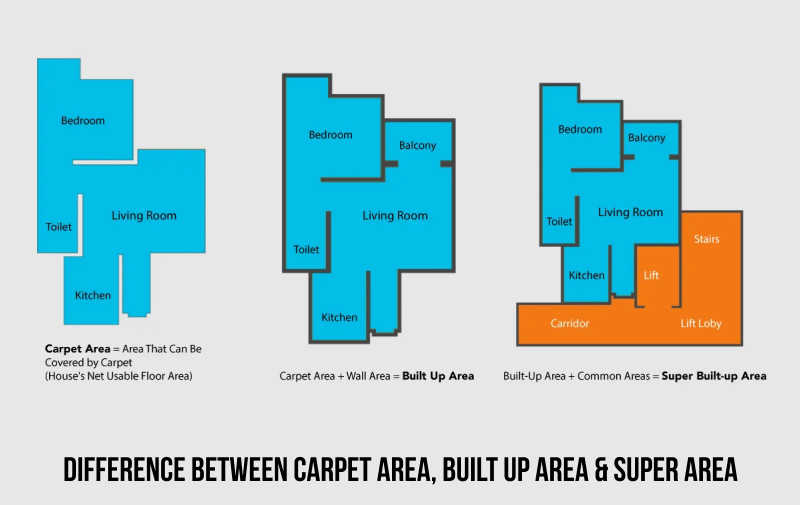
Bye -law No 68 clearly states, which is called (Service Charges) to be shared equally among Members which includes Salaries of staff,watchman, Lift man, Lift Maintenance Gardner, Property Taxes of Society Office, Printing stationery ,Conveyance, Meeting charges, Education fund, Housing Federation Subscription Audit Fees Legal charges and Common Electricity charges. Bye-law No 69 clearly states Property Taxes should be charged on Carpet Area of Flat, Sinking Fund 0.25% of Construction Cost, Major Repair Fund @0.75% of Construction cost, Building Insurance and N.A. Taxes will be as per Built Up Area of Flat . Water Charges as per Size and total Water Inlet in the Flat. If the number of inlets is more in Flats for a bigger it should be charged proportionaly, Painting Fund if any should be collected as per Built up area of Flat. Bye Law No. 78(b) PARKING WILL BE ON FIRST COME FIRST SERVE BASIS. Christopher Fredericks
Dear All,
I would like to inform all that when a Society is Registered it has to adopt Model Bye-laws of the Co-operative Society Ltd governed under Maharashtra Co-operative Societies Act.
Bye -law No 68 clearly states, which is called (Service Charges) to be shared equally among Members which includes Salaries of staff,watchman, Lift man, Lift Maintenance Gardner, Property Taxes of Society Office, Printing stationery ,Conveyance, Meeting charges, Education fund, Housing Federation Subscription Audit Fees Legal charges and Common Electricity charges. Bye-law No 69 clearly states Property Taxes should be charged on Carpet Area of Flat, Sinking Fund 0.25% of Construction Cost, Major Repair Fund @0.75% of Construction cost, Building Insurance and N.A. Taxes will be as per Built Up Area of Flat . Water Charges as per Size and total Water Inlet in the Flat. If the number of inlets is more in Flats for a bigger Flats it should be charged proportionaly, Painting Fund if any should be collected as per Built up area of Flat. Bye Law No. 78(b) PARKING WILL BE ON FIRST COME FIRST SERVE BASIS. Christopher Fredericks
What does sq ft of your house have to do with maintenance of common space — unless you can reliably determine that your sq footage will be directly related to your usage or the deterioration of common areas. It should be a flat fee for all units based on common area that needs to be maintained.
[...] are made in the by-laws of the association for collecting the maintenance charges. The builders allow the apartment owners to form their own association and fix the charges. The [...]
I am in chennai for almost 19 years and moved to my own flat way back in1993.I was made
Secretary of the Association of our block with 16 flats.In 2 years promoted to as Presidant
which post I still hold.
What we do here ,we charge on flat rate per month which are fixed.As living cost increase and expense on security etc.increase ,we call a meeting of the association and take a decision on
enhancing the maintenance fees per month.
Similarly when any major expense is to be inoccured we meet and decide and implement.
We have not encountered any problem though handling this work single handedly,beside
working in a Ltd. company as their Sr.Vice Presidant .
It is the will of persons and unity that is required.
I thought of commenting as soon I shall be moving to Pune to stay in Eisha Bella Vista.
Like to know more on the rights of each flat owners who had to leave the association due to the associations attitude of acting as if they are above the law. my email id is pinheirocharles08@gmail.com. thank you. warm regards charles.
It is a well known fact under the societies act most of the apartment owners’ assocations are registered. Under that act to form an association only seven members are required. Some like minded people get together and initiate action for forming the association,making the bye-laws and getting it registered. Our constitution also was drafted in a similar manner by the constituent assembly. The difficulty lies in thinking and the attitude of persons. It has become fashion of the day to question the authority and command. Disobedience of the bye-laws clauses are of highest order. Sometimes I feel why not remove the penal clauses when it could not be implemented. I am a DRDO Scientist and after retirement is involved in such type of association activities. I remeber to have read a quote from a German Scientist that An indian is the best individually and collectively is a hopless lot. No amount of discussion will solve the issues wihout willingness to cooperate. Liberty is not a personal affair but a matter of accommodation and adjustment (read somewhere). In an association, in my opinion everyone must bother for others right rather than his own. Not only in common floor I find such type of discussion wihout and conclusion.
Hi Sir, Could you advise where I can find the bylaws and the address of the authority who register the associations please. I am in chennai. There is only 4 flats in my building and I left the association, so 3 flat owner can have a association please. ? Many thanks
Offensive and unintelligent to quote what some foreign creep had to say re Indians. equally ofensive if we were to say similar about any one community! Sorry unrelated: I am tired of Indians quoting derogatory rubbish.
All should understand that talking about the rules will not solve any problem. All should arrive the logical way which should be acceptable to all. The per sq. ft charging method is the most simple and acceptable way for collecting the charges. Any area owned by a flat owner includes X% of common charges on the build up are of the flat which is equal to all in terms of the %. Say a person buying 1000 sq.ft will be paying for 1200 sq.ft if the common % is 20% and the other person who buy 800 sq.ft will pay for 960 sq.ft. The land is proportionately registered with reference to the super built up area(sellable area) of each flat. So, for all practical purpose, the flat area is the Nth % of ownership in the apartment. Also Any valuation of a flat in an apartment will be done with reference to the overall amenities attached with the apartment and calculated for each sq. ft area of such flat. So it is logical and correct to collect the entire maintenance cost w.r.t. the area of the flat. Try to answer this question. An apartment is having 10 different size of flats (maintained evenly both internal and external) and the entire apartment is sold to a builder to demolish and rebuild. Now can all the member share equally the sale value irrespective of the area of the flat?. The answer cannot be yes. All the owners know that 20% is the common amenities. Will all the owner share the 20% of the sale value equally and the balance wrt to their built up area? Now also they wont agree. All will answer that the sale value will be apportioned based on their flat area. Hence there is logic behind collecting charges based on their flat area which is the base for arriving their share of ownership for the apart as well as for the common amenities.
Consumption of services by residents through the life of a property does not add to the sale value at end of life of the property. A buyer who buys for demolition, will not pay more for the property because residents had 24 hour power backup or had Group 4 security. Hence for services consumed by the residents, the residents have to pay based on their consumption pattern. It can be determined whether consumption is related to size of the apartment or number of people or both. However a future action like sale of property for demolition after 100 years should not dictate today’s charging method for services consumed today. If all residents are using the common services and common areas equally they should pay for services equally.
Maharashtra Co-operative Societies Act says that non-accupants should not be charged more that 10% of the maintenance. Is this law applicable to apartments in Karnataka, especially in Bangalore?
[...] charge for apartment: In apartment there will be cost or fee for maintenance of amenities and facilities available in the apartment. In most case, apartment owners form an association of [...]
I live in a building which has on 4 flats. this 4 flat owner formed a association. I resigned from the association in protest to one of the flat owners brutal verbal attack on my children when they play around, and denial of my legal right as a the legal resident of the flat and as member of the association. It went to a extent when one of the flat owner, attacked and damaged my property besides he was trying enter my house and attack me as well. In this sceanorio i kept paying for common expenses, but this association will not give a receipt or wont show the original bill of expenses, how much the expense incured. when i asked, i was told i have no rights. what is the way out of this ridiculous situation? what is my rights as legal owner of the Flat? the way association is acting is if I am living on thier charity and i have no rights whatsoever be it. Please advise the way out of this situation. I choosed a building with only flats, thinking there will be peace, my life has been made miserable by this association. please advise. thanks.
friend,
read the old/new model co-op residence society,
if you are right then 1st go to local police, next send a registered letter to the hon.secretary. (all mng.commitee is just honorary o.k.)
& u be calm, & IF NOT THEN simple lawyer can give a notice to the society at there cost.
“generaly, no need to be frightened, these are petty matter’s in societie’s”
Maintenance fee.
Once total maintenance cost is worked, well, one of the above methods can be applied.
Any clue about, how Apartment Onwers association fixes the maintenance fee.. There seem to be models where Infrastructure maintnance companies charge for the personnel deployed plus some over head + profit ..
Some others, some flat fee where the vendor doesnot give breakup of his charges.
Do Apartment associations help other associations with models, typical costs….
Generally we hope, members will take due care. Often lack of knowledge and exposure on their part could lead to bad contract and poor service. Such dissimination of information would help new apartment owners, which are increasing by day.
Thanks
Dear Sir,
I am living a 600 sq.ft. flat . I am purchased on 2003. From the first meeting itself I informed the associated I accept only sq.ft wise maintenance. They are not accepted. But I paid waht ever they asking I paid. Now I am stricklyu informed my association I paid only sq.ft maintenance of Dividing system i.e what all are the expenses for the the month I pwill pay my share. They are not accepted. this difference size flat owners like mine 600, 750, 850, 1000 & 1200 sq.ft flat. Now association is say they are going to cut my water line & drinage line because non payment of maintenance. I am not denaying to paying my actual expenses. They have the right to cut the water & Drinage line
Whoever says that maintenance should not be charged based on square feet please take a stand on the following situations
1. If I own 10 units in a 20 unit apartment complex, can I just pay maintenance charge only for one unit?
2. If association decides to generate income from the whole apartment complex by renting it out can the income be shared equally by all the owners?
The answer to both of the above questions have to be NO right? Then what’s this big issue with paying by sq ft? Remember you are paying the charges whether your unit is being used or not. So it not right to link it to usage factors such as number of people living etc.
Thanks
Afsal
Dear Sir,
Thank you for your reply. I have one question. Any Association have any right disconnect my sewerage line and my water line. Please I want the answer. Because they said non payment of maintenance Association have full right to disconnect the line. Is it True?
Two arguments are possible. pay as per area of your flat or flat rate.
There is no way to precisely calculate as some smaller homes could have more people (hence more consumption) and the same argument is applicable to bigger flats.
The only way out is magnanimity on the part of BIG apartment owners.
Fee distribution as per flat area could be thought of a reflection of magnanimity on the part of large flat owners. The reason :- Typically small apartment owners could be less affluent thatn their large flat counter parts. Exceptions are possible, though !
Flat rate across different floor spaces, perhaps doesnot exhist anywhere, to the extent we hear.
I don’t understand as to why this argument continues. If you see the karnataka apartment ownership act, 1972, clause 10 very clearly says that the expenses shall be charged on proportionate basis.
There ends the ambiguity. The law of the land has to be applied.
Dear Sir,
Thank you for your reply. I have one question. Any Association have any right disconnect my sewerage line and my water line. Please I want the answer. Because they said non payment of maintenance Association have full right to disconnect the line. Is it True? I am ready to pay sq.ft wise maintenance or actual expenses of my share monthly. Association not accept my cash.
Dear Sir,
Thank you for your reply. I have one question. Any Association have any right disconnect my sewerage line and my water line. Please I want the answer. Because they said non payment of maintenance Association have full right to disconnect the line. Is it True? I am ready to pay sq.ft wise maintenance or actual expenses of my share monthly. Association not accept.
Hi Beena,
I read somewhere that the association has no rights to cut your water / sewage line. They can take legal action against you.
Hi Been, the website link given below answer your questions above.
http://www.commonfloor.com/articles/legal-powers-duties-of-apartment-owners-association-687.html
Here at the link, I saw the below statement:
The apartment owners association has right to sue defaulting members but the apartment owners association cannot cut or terminate any facility enjoyed by the owner. The apartment owners association can only initiate legal proceedings for recovery of the outstanding and can seek other relief as may be permissible under the law.
I stay inan apartment in Bangalore that has 6 flats. I look after teh maintenance. I think the best apparoch for calculating maintenance fee is :
1) Compute expenses for common utilities such as common electricity, repairs in common area, maintenece (cleaning) for common area and divide this amount by number of flats to get fixed cost per flat.
2) Compute water charges (we dont have borewell water) based on ACTUAL consumption as indicted by water meter readings. The water charges would be variable amount for individual flats. Water charges per flat would be simply computed by dividing the total consumption per flat divided by total consumption for the apartment as a whole. We musltiply this ration by the total amount spent on water (charges to be paid to corporation + charges paid to water tanker , if any).
Compute the maintenance charges per flat based by adding 1 and 2 above. This way I believe the maintenance charges are equitable.
Service charges are to be paid equally by the flat owners as per the model bye law69(vi) published in Maharastra. Non- occupancy charges are to be paid at 10%(More0 on service charges.this is applicabl to owners who have rented out their flatsThis has the appoval of Bombay High court . if all Societies and apartment condominium follow this litigation can be avoided
Based on the various reading just wanted to know how to resolve a dispute in my society where 1 bhk flat owners are asking for carpet area based maintenance fees whereas 2 bhk flat owners ae wanting it equally. what is the legal option available to 1 bhk flat owners.
Also wanted to check if still parking can be sold by the builder or it is the same as open parking on first come first basis
1. Are all the laws and bylaws discussed here applicable only to registered societies in India /of a particular state and not to Apartments i.e. less that 7 occupant owners?
2. Are there separate laws regarding tenancy and maintenance charges for Apartments?
3. My Apartment has 6 flat owners and two of them have moved out permanently and have rented their flats. What does the law say regarding maintenance charges to be applied to tenants of rented flats? The residents owners toil to maintain the Apartment building for last 1o years with no physical involvement of any sort by the tenants or the flat owners for the welfare of the building where as enjoying all the amenities at the same time paying pittance. So charging the same maintenance charges to rented flats as paid by resident owners seems illogical and downright absurd. Some apartments charge twice the amount, some one and half times, still others charge 10 percent additional maintenance from the tenant/rented flat. No one seems to know what is the exact rule regarding this applicable to apartment buildings.
Can someone throw a light on this from the legal stand point? What additional charges can be applied to tenant who otherwise enjoy the fruits without contributing anything worthwhile, in fact mostly misusing the amenities and littering the premises etc.
thank you. Harsha Date, Kothrud Pune
The law of 10 percent extra on maintenance to be charged to tenants is really absurd. The flat owners who have rented their flats for many many years do not attend the meetings, not do they have any interest towards the welfare of the Apartment where they own a flat. Their sole interest in making money through heft rent and make merry. In small Apartment buildings the residents have to handle the charge of Secretary, Treasurer etc by rotation and look after the building on a day to day basis. On the other hand the tenants have no role to play but to misuse the property as far as possible.The owners of these rented flats, because of this 10 percent business are more than happy to dish out extra 10 percent knowing well that the residents will take care of the rest. This needs to change. Some societies and apartments do charge 1.5 times or two times the amount of the normal maintenance. Is my Apartment for example, two flat owners who are staying elsewhere are having a ball of time by just paying 40 rupees extra per month. They never attend meetings, never need to look after anything and can not take charge of handling accounts or doing maintenance works. This is utter injustice. Wake up Government wake up!
Hi,
How do we calculate the per square feet rate? For e.g. we have a DG in our apartment which we would like to share using the “Per square feet” method. Assume the DG charges come to around 50000 / year, how to arrive at a “per square feet” rate?